- Frontend Boundaries Matter
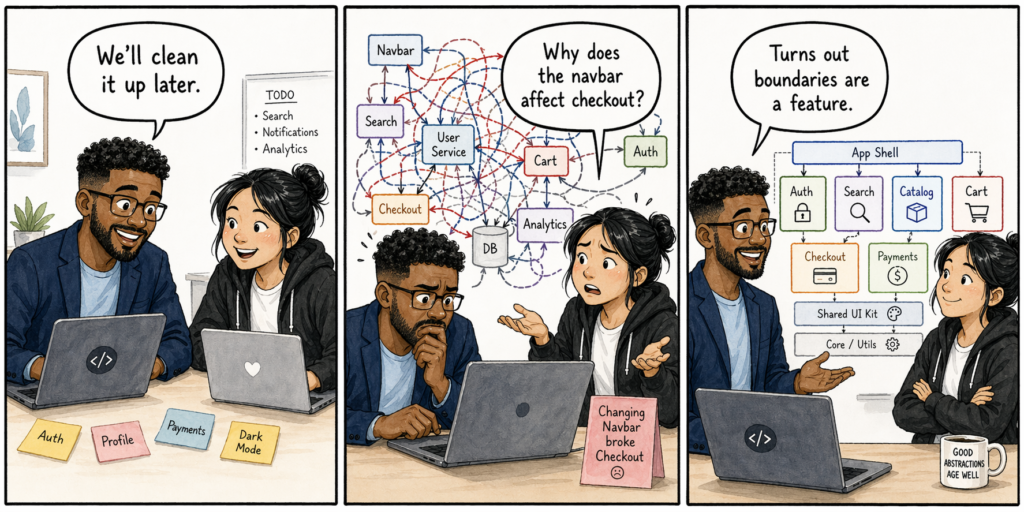 Good frontend boundaries are not about adding ceremony, they are about protecting clarity. When features, state, and UI concerns bleed into each other, small changes start causing surprising breakages in totally unrelated parts of the app. Clear boundaries give each part of the system a defined job, which makes the codebase easier to reason about,… Read more: Frontend Boundaries Matter
-

Developer Experience Is a Feature, Not a Perk
On Tuesday at 4:57pm, nobody is thinking about “developer experience.” They’re thinking about why the build is taking seven minutes, why the test suite is red in CI but green locally, and why a brand-new teammate is Slack-searching for “how do I run this thing” like they’re trying to defuse a bomb with vibes. That’s…
-

Coverage Is a Number. Confidence Is a Strategy.
I used to treat testing like a fitness tracker: if the number went up, I felt like I was doing the right thing. “We hit 85%!” sounded like progress, even when nobody could explain what that 85% actually protected. Now I think about testing the way I think about on-call: it’s not about how much…
-

Performance Starts Before the Profiler
The most satisfying performance wins I’ve ever shipped didn’t come from heroic late-night profiling sessions with fifteen tabs open and a sinking feeling in my stomach. They happened earlier. Quietly. Almost boringly. They happened when someone paused during implementation and asked, “Where does this state actually belong?” Or when we decided to keep a data…
-

Architecture Is Just Choosing Your Pain (On Purpose)
Someone asks, “Why did you pick that stack?” and you can almost feel the room hoping you’ll say, “Because it’s popular,” so we can all move on and go back to shipping tickets. But “popular” is not an architecture strategy. It’s a vibe. And vibes don’t show up in your incident postmortem. Every technical decision…